
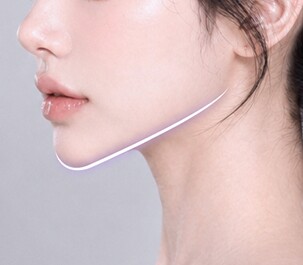
Defining a clear lower-face line:
your last surgery
Double Chin Revision
Double chin revision: why get it at SINSANG?
Double chin surgery that suctions only subcutaneous fat often fails to resolve the underlying problem.
As a clinic specializing in revision surgery, SINSANG Plastic Surgery offers an innovative '3-Core Correction' system that goes beyond the limits of the first surgery.
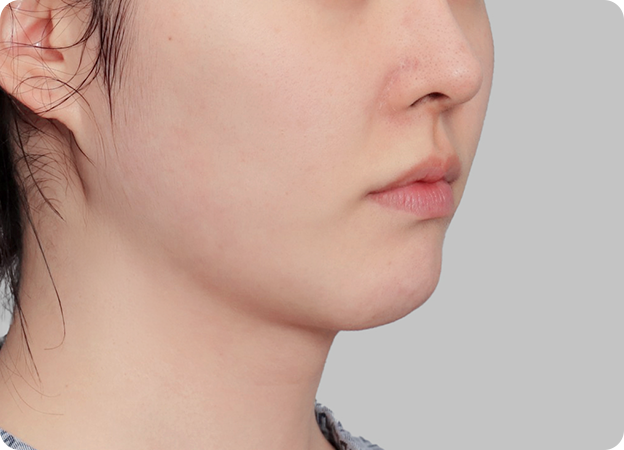
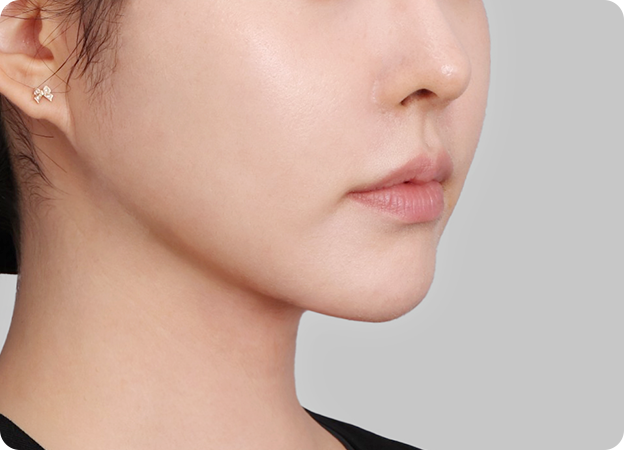
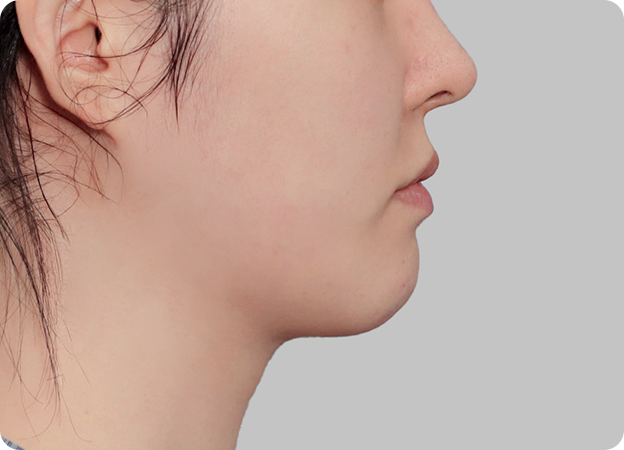
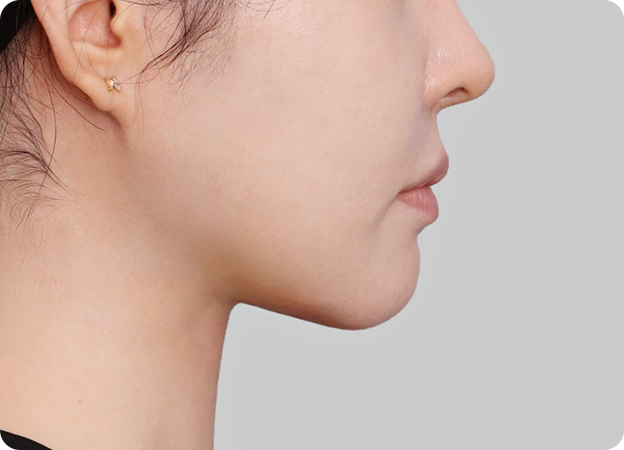
*Before and after photos of an actual patient who underwent double chin revision at our clinic.
Why Double Chin Surgery Fails
SINSANG Double Chin Revision
At SINSANG Plastic Surgery, specializing in double chin revision,
'3-Core Correction'
resolves the fundamental problems of double chin surgery.

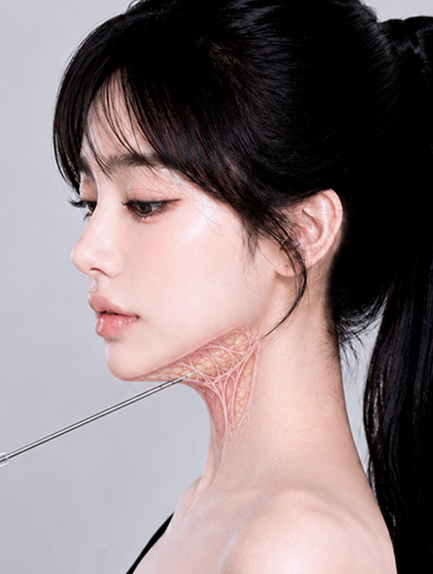
Adhesion tissue release
and residual fat suction
Adhesion tissue that causes an uneven surface is carefully
dissected, and residual fat remaining after the first surgery
is precisely suctioned.
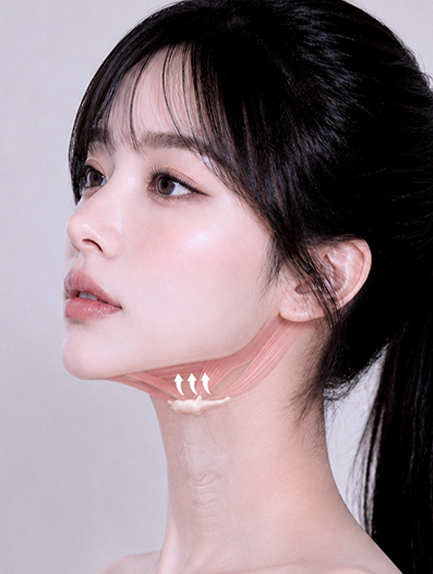
Hyoid correction
that improves the angle
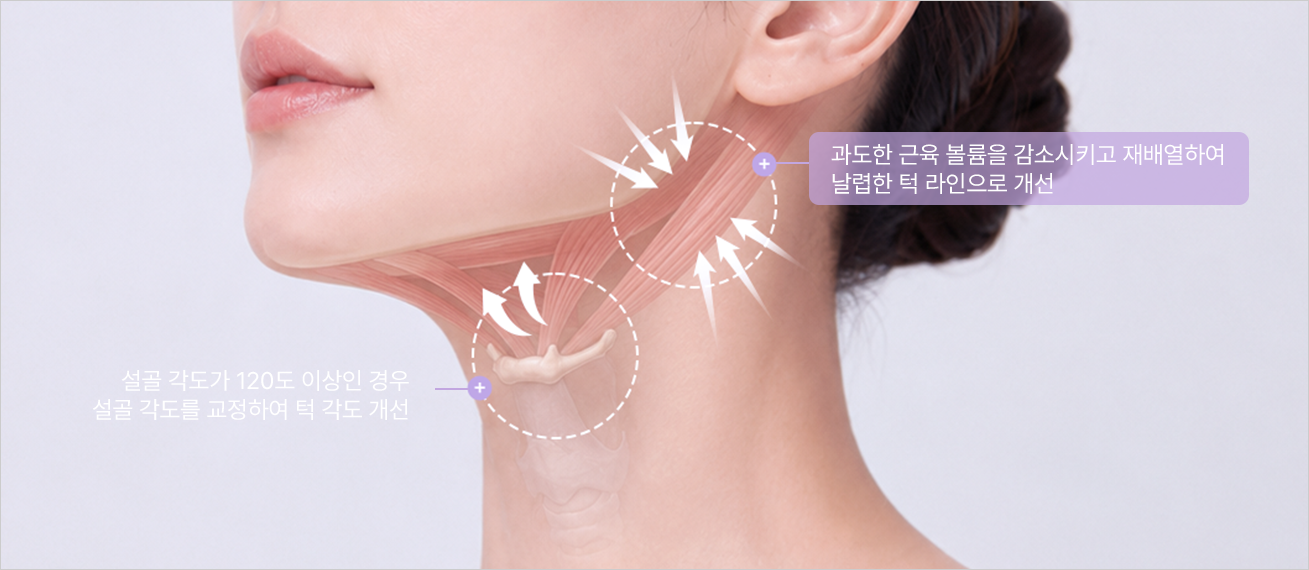
By correcting the hyoid bone with ultrasound guidance,
the angle between the neck and jaw is improved.
Reduction and realignment
of an excessive digastric muscle
When the digastric muscle is excessively large,
the muscle is reduced and realigned to improve the jawline.
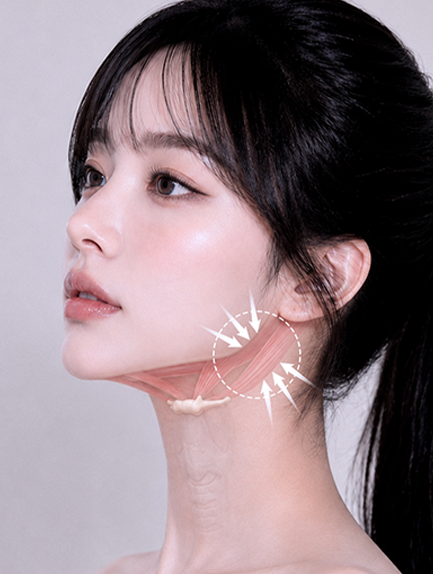
Reduction and correction
of enlarged salivary glands
When enlarged salivary glands make the jawline look blurred,
the salivary glands are selectively reduced and corrected.
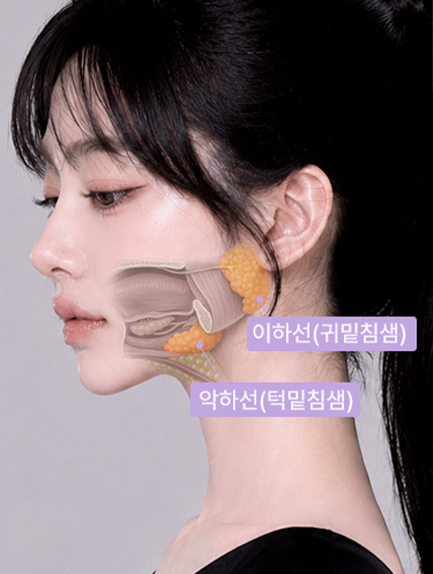
Did you know that the jawline is also affected by the tongue?
Improving the hyoid bone and digastric muscle, which are closely connected to the double chin,
can create a dramatically sharper jawline.
Double Chin Revision
Surgical Protocol Timeline
STEP 1

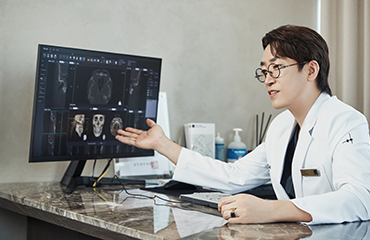
3D Scanning & Ultrasound Examination
We analyze the cause of your double chin
and propose a customized plan.STEP 2
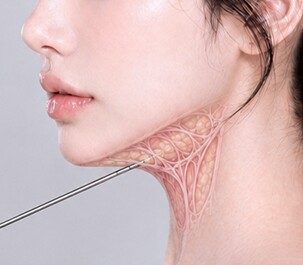
Adhesion Release & Precise Liposuction
Tissue that adhered after the first surgery is dissected
and residual fat is precisely removed.STEP 3
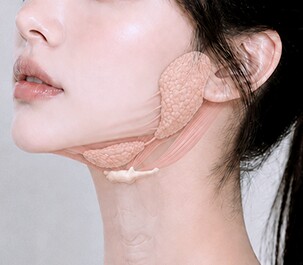
3-Core Correction
The hyoid, digastric muscle and salivary glands are corrected as needed
to create a sharp jawline.STEP 4
Jawline Fixation
To keep a sharp jawline for a long time,
the elasticity of the jawline and neck is reinforced.
Revision Candidate Checklist


Basic Surgery Information
- Surgery Time2–3 hours depending on the revision case
- AnesthesiaIV sedation
- HospitalizationSame-day discharge
- Suture RemovalAfter 7 days
Recommended For
- Those whose jawline did not improve after the first surgery
- Those who can feel firm adhesion tissue under the chin
- Those with residual volume due to protruding salivary glands and muscles
- Those with a hyoid angle of 120˚ or more
Double Chin Revision FAQ
-
Hyoid repositioning does not affect vocal function.
The hyoid bone plays only an indirect role in vocalization, and the surgery only improves its external angle. -
Selective salivary gland reduction treats only part of the gland, not all of it, so the remaining gland tissue
compensates for its function and dryness does not occur.
-
Generally there is swelling and mild pain for about 3–5 days,
and recovery is often faster than the first surgery thanks to a more detailed approach. -
The surgical scar is very small, less than 2 cm, along the natural crease under the chin,
and becomes nearly invisible over time.