
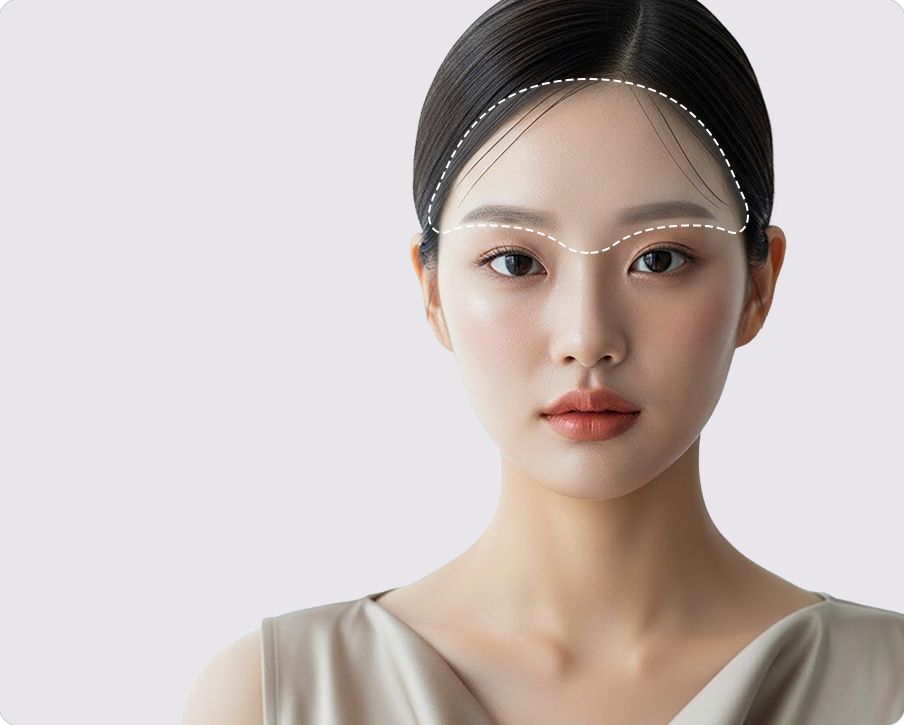
Improve forehead wrinkles and the eye area at once.
Precisely lifting the forehead and eyebrows improves both appearance and function.
Forehead Lift
Extensive dissection
for stronger fixation
and preventing recurrence
Through an endoscope that provides a wide field of view,
we directly check whether retaining ligaments are released and nerves preserved,
dissecting precisely to minimize tissue damage.
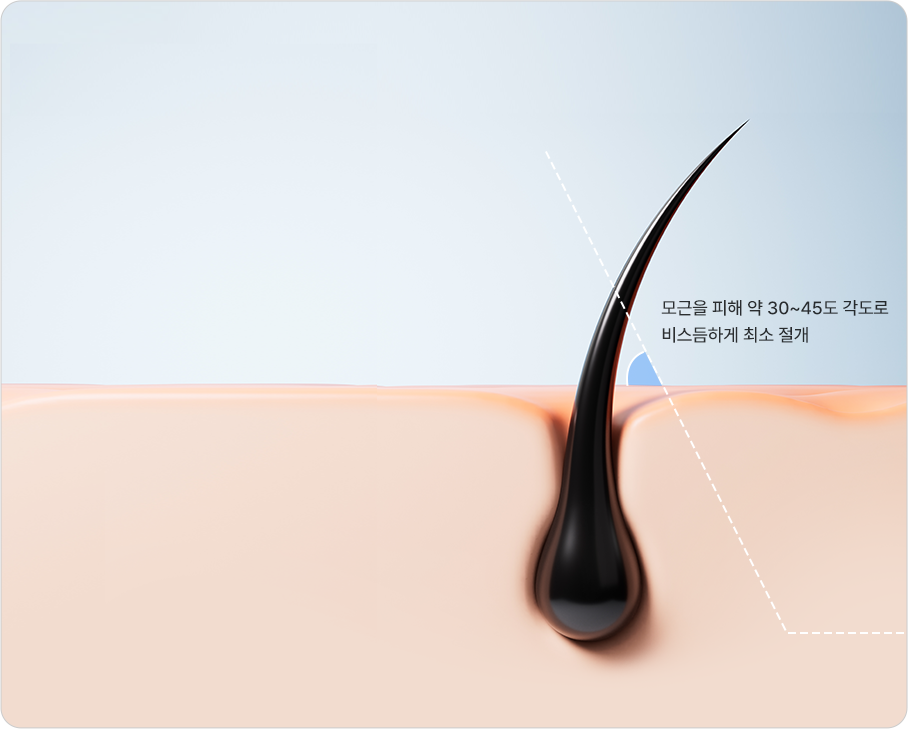
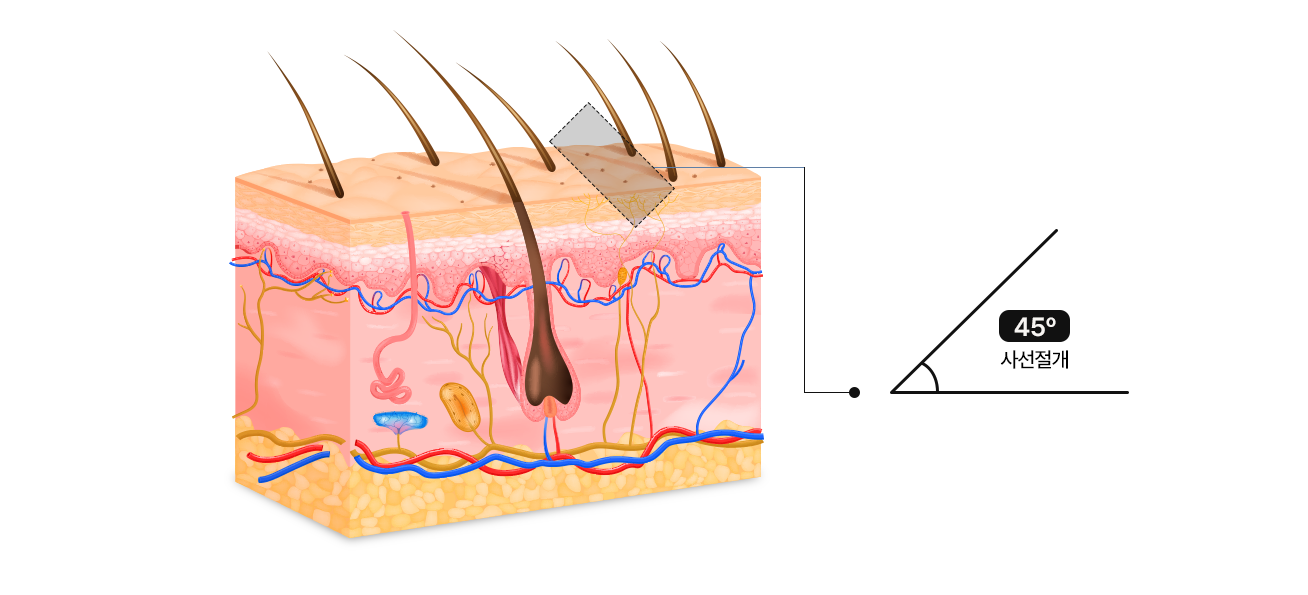
30–45 degree oblique incision
that reduces hair loss concerns
Oblique incisions are made taking into account the direction of hair growth.
By using an incision direction that helps reduce follicle damage,
hair grows through the incision line after surgery, naturally hiding
any possible scar.
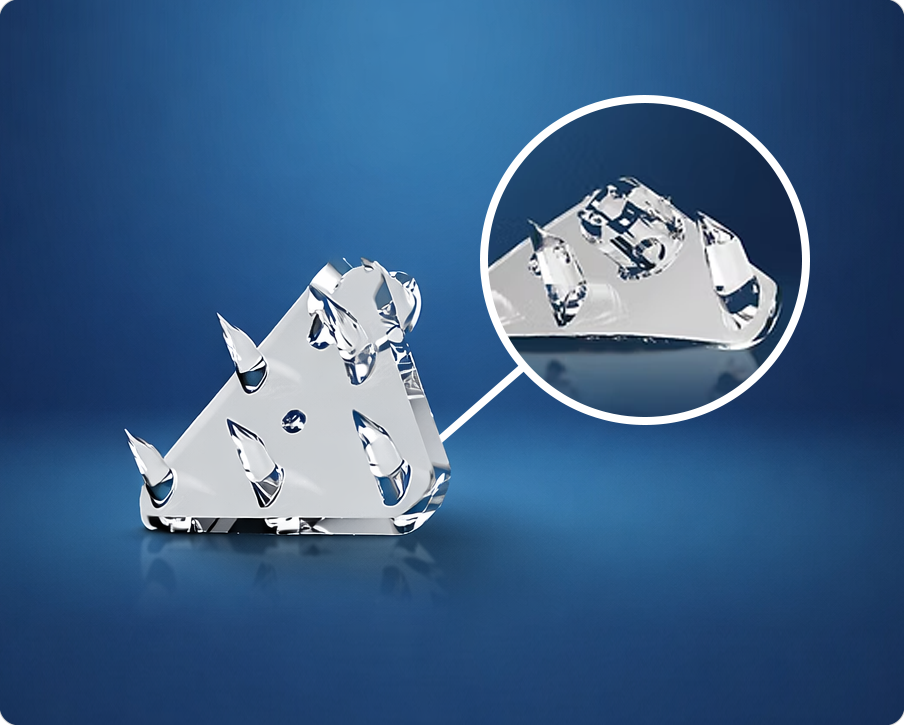
Endotine fixation for
firm, stable retention
Endotine is an FDA-approved bioabsorbable fixation device that,
after scalp dissection, quickly and firmly fuses the forehead tissue,
improving the stability and longevity of the results.
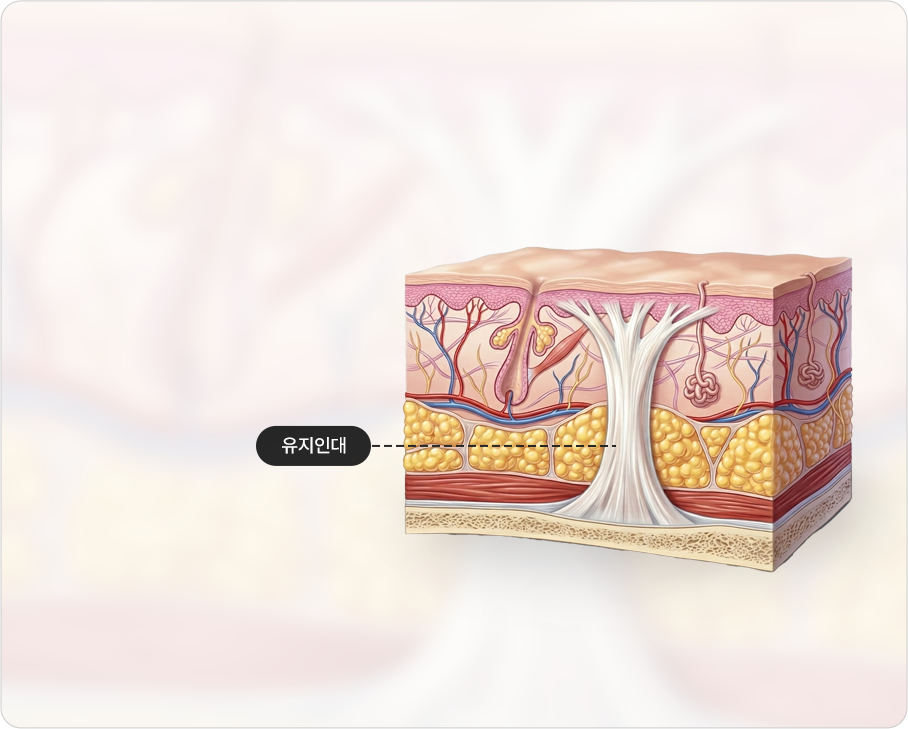
Releasing the retaining ligaments
that hold the skin tightly
Only by precisely releasing the retaining ligaments that support the skin before lifting
can the tissue be stably fixed for natural results.
The retaining ligaments must also be sufficiently dissected for a smooth line without unevenness.
How a Forehead Lift Works
The retaining ligaments holding the sagging tissue are released and the muscles are corrected to naturally lift the forehead and eyebrows.
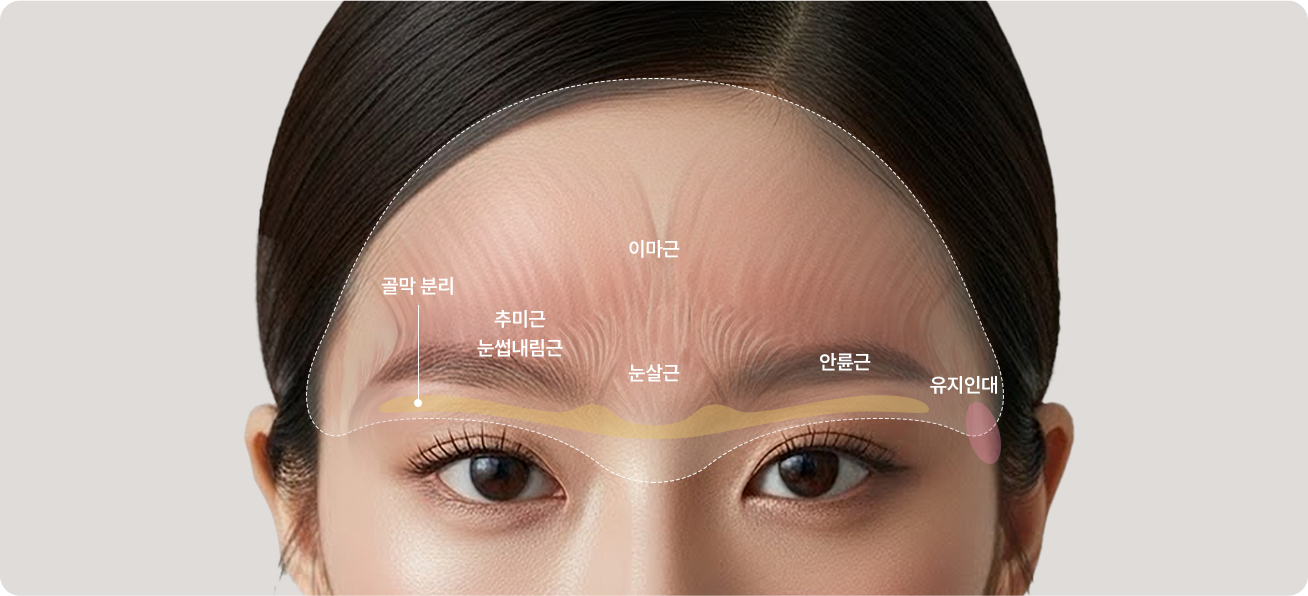
Extensive know-how and skill are important in a forehead lift.
· To improve a sagging forehead and eyebrows, the retaining ligaments are precisely dissected to free tissue movement.
· Delicate surgery that takes the nerve structure into account can be expected to provide stable lifting results.
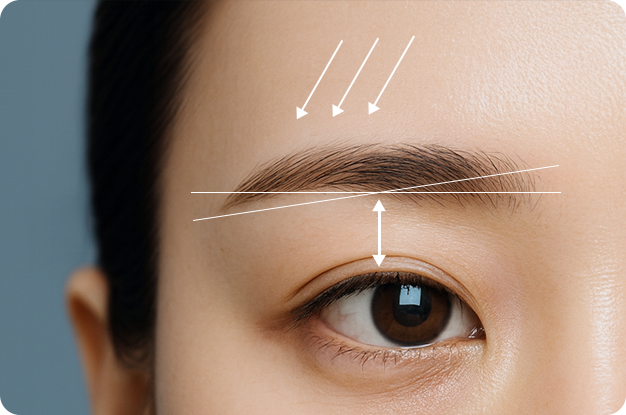
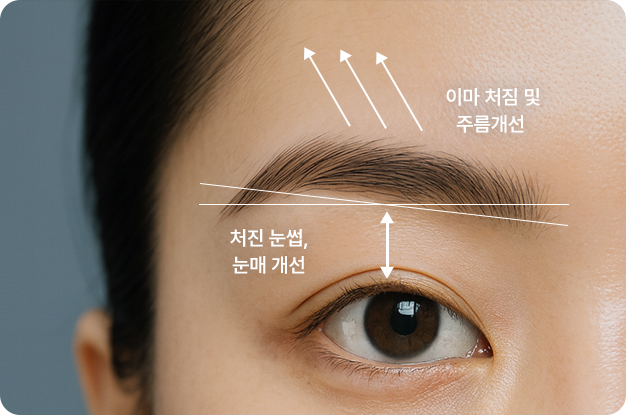
Forehead Lift
Customized Incisions to Minimize Scarring
A minimal incision at 4 points inside the hairline reduces scarring, swelling and pain
and promotes natural recovery.
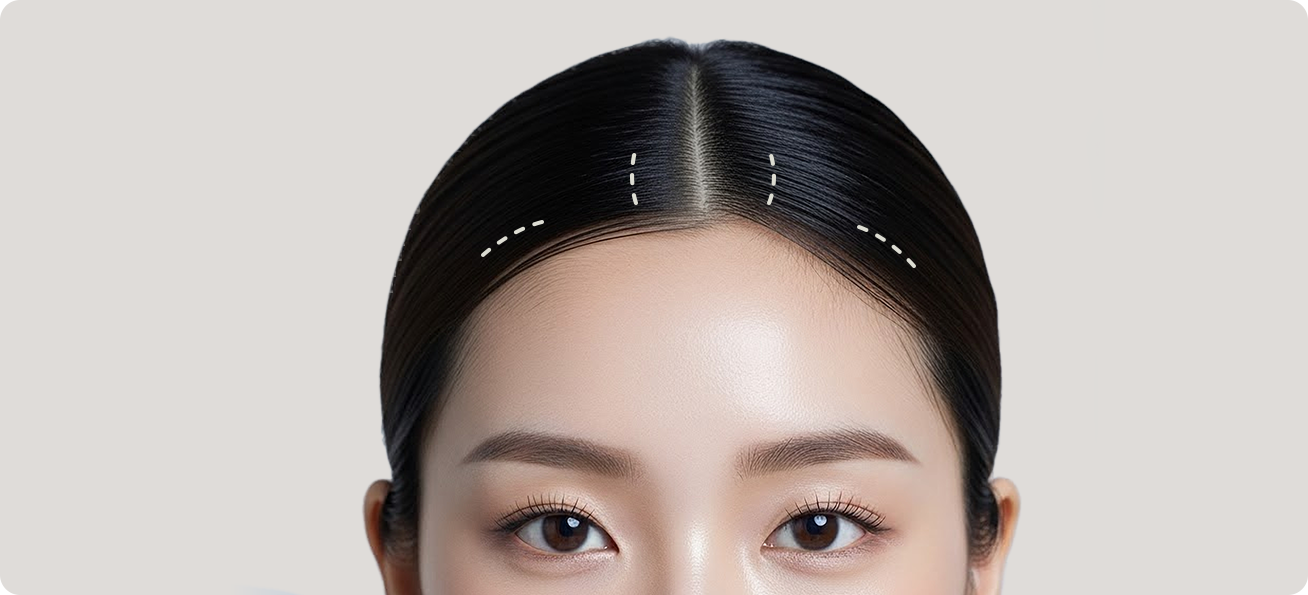
*Incision points may vary depending on each individual's degree of skin sagging and
surgical method.
Incision Design to Minimize Hair Damage
Customized minimal incisions and oblique incisions reduce hair follicle damage and lower the risk of hair loss.
Layer-Customized 3-Step Lifting
Precisely lifting from the epidermis to the dermis and SMAS layer improves drooping eyelids and forehead and glabellar wrinkles at the same time.
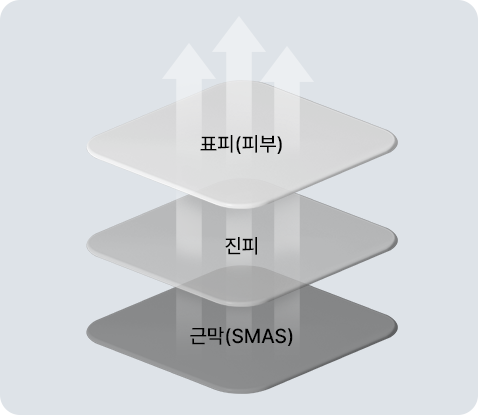
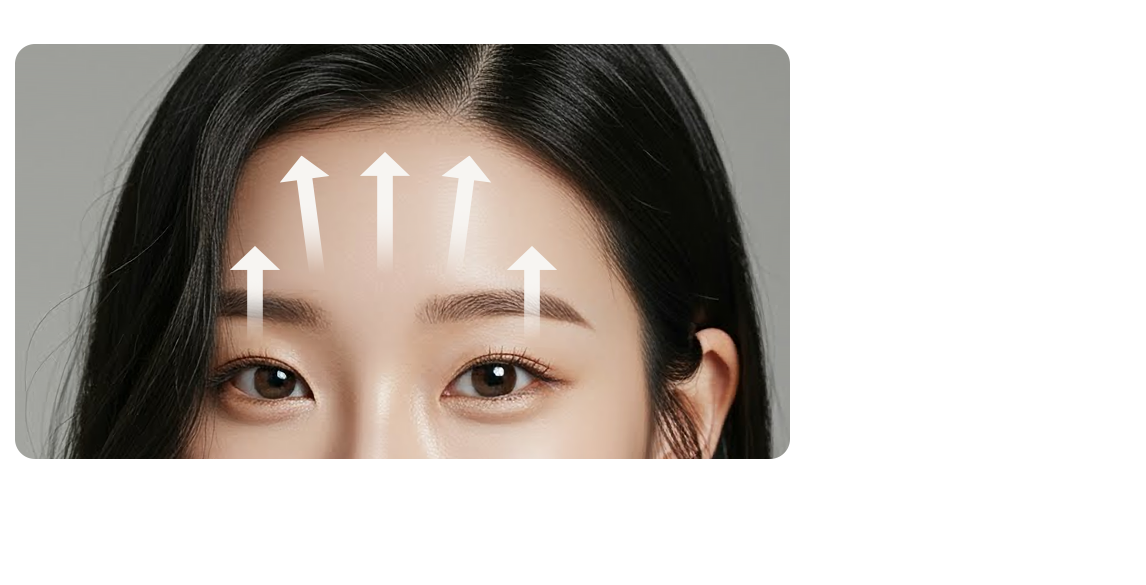
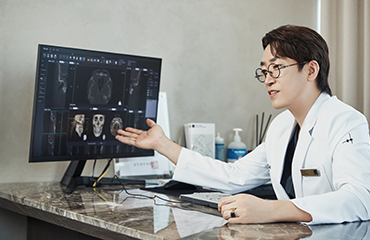
Customized Lifting Based on Precise Analysis
After a detailed diagnosis of degree of aging, facial structure and skin elasticity, we achieve natural results with the optimal dissection range for each individual.
Analysis of
individual degree of aging
Analysis of
muscle and fat distribution
and condition
Analysis of skin elasticity
and excision amount
Analysis of
natural degree of lift
Forehead Lift Surgical Method
Precise dissection and strong fixation lift sagging skin, improving forehead and eyebrow sagging without scarring concerns.
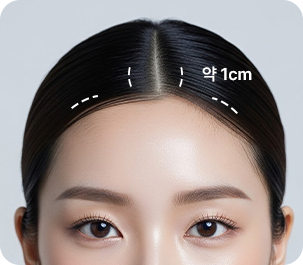
Minimal Incision Inside the Hairline
A minimal incision of about 1 cm is made
at 4 points inside the hairline.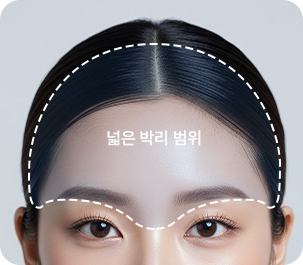
Precise Tissue Dissection
Tissue and retaining ligaments are dissected
while checking the location of blood vessels and nerves with an endoscope.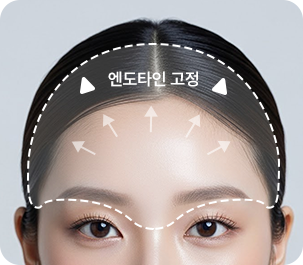
Endotine Fixation
After the sagging area is lifted,
it is fixed with Endotine.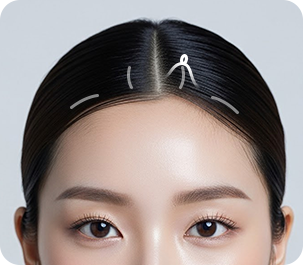
Delicate Suturing
Each skin layer is carefully sutured
to minimize scarring concerns.
*Complications such as infection and inflammation may occur after surgery, and satisfaction varies from person to person.


Basic Surgery Information
- Surgery TimeAbout 1 hour – 1 hour 30 minutes
- AnesthesiaIV sedation
- HospitalizationNot required
- Suture RemovalAround 5–7 days after surgery
Recommended For
- Those concerned about deep forehead and glabellar (frown) lines
- Those whose eyes look heavy due to drooping eyelids
- Those who want a clear, bright impression
- Those concerned about a narrow forehead or asymmetric eyebrows
Forehead Lift FAQ
-
Sagging of the forehead and eyelids that makes the eyes look heavy
is a symptom that can appear in anyone regardless of age.
So even in your 20s–30s, we recommend a forehead lift if forehead elasticity needs improvement. -
Since only about 1 cm of the scalp above the hairline is incised, scarring is minimal.
In addition, the incision preserves the hair roots so that hair later grows
through the incision site, helping to hide the scar better. -
A forehead lift is possible even if you have had a thread lift.
If threads still remain under the skin, they are removed during surgery.
-
Revision forehead lift is possible. However, to allow tissue damaged in the first surgery
to recover, we recommend waiting about 6 months before revision surgery. -
We use Endotine for fixation, which has a low risk of inflammation and pain.
Endotine is an FDA-approved bioabsorbable fixation device that, after scalp dissection,
quickly and firmly fuses the forehead tissue, improving the stability and longevity of the results. -
Because the surgery pulls the SMAS layer, the tissue surrounding the facial expression muscles,
some temporary discomfort in facial movement may occur. Your expressions may feel awkward for about 1–2 months,
but after 3–4 months they gradually soften and become natural.